
A little homage to blending.
It’s no secret that I love a blend. I believe my wines are better because of it and my company was able to develop an identity much faster because of it. So I’m paid up. I am unashamedly pro-blend. But we live in a world where people mostly order by grape variety and my wines don’t work that way which is why I wanted to briefly explain why I do it, what the benefits are and hopefully help you understand why Paso is the way it is.
I want to start by saying I don’t have a problem with the modern prevalence of single variety wines. It’s a step on the journey to wines being served with more provenance and less fear. I vividly remember when we used to order wine by ‘Dry, Medium or Sweet’ so we’ve come a long way in how we categorise wines. And wines need to be categorised. There are too many of them and we need them to be accessible. And not just to people who live for wine. To people who simply want their next glass to taste vaguely like the last one they enjoyed.
When new world wines boomed and new world marketing kicked in, they jumped on this idea and launched their wines with accessibility in mind to try and capture a public that was drinking more wine and open to a new approach. Colours and countries are too broad, producers and sub-regions too narrow so it’s inevitable that varieties were the best option. It’s easy to remember that you like a Malbec or a Sauvignon-Blanc but remembering you like specific wines from Cahors or Marlborough (and finding a bar that knows what that means) is a very different story.
There are a lot of wines that fall through the gaps though and if you’re not from a region famous enough to elicit a ripple of understanding in the public consciousness (Bordeaux, Rioja etc) you’re a bit stuck. You need the person serving or selling your wine to go into bat for you and this is isn’t always possible. It’s an overpopulated market and people are loyal to what they know and that goes for people selling wine as much as consumers so being a new wine without an easy jumping off point isn’t ideal.
I know all this and still make blends. Even though it sometimes feels like I’m swimming upstream, I think I make better wines when they’re blended so in my mind it’s worth taking the marketing hit. Which brings us round to why I blend my wines.
Why do I blend my wines?
Predominantly I blend to create a wine that is worth more than the sum of its parts by taking the best bits of different vineyards/varieties/batches/processes (more on that later) and bringing them together in my preferred style. The hope is that by opening myself up to a broader range of ‘ingredients’ I can enrich the wine with more complexity, length, acidity or whatever it is that I’m chasing. I’m also allowing myself the opportunity for some continuity. Every vintage is different and our wines are vintage wines but we need our house range to be a constant presence with no major jumps when the years tick by. Having a blend makes this a lot easier. We can set ourselves some parameters for our houses wines to exist within so people can buy with confidence and (hopefully) regularity.
How do I blend my wines?
I firmly believe in working small. We’ve made wines in big batches and in certain vintages we’ve had to push the boundaries I’m comfortable with, but at their best, our wines are always crafted from small batches. Handpicked, hand processed, with every batch treated as if it’s going to become a wine in its own right. While we may have an idea of where things are going to end up (we only have a few options!) we always make sure that every batch gets a chance to shine. We want to make the right decisions at the right time so by working small we can ensure that this early pick of chardonnay gets inoculated and chilled, that batch goes to barrel and is fermented wild, this one gets stirred and so on and so on and so. It’s an endless rotation of tasting, chatting, planning, and executing, in the hope that we have a winery full of possibilities when we come to take our base wines and turn them into finished wines.
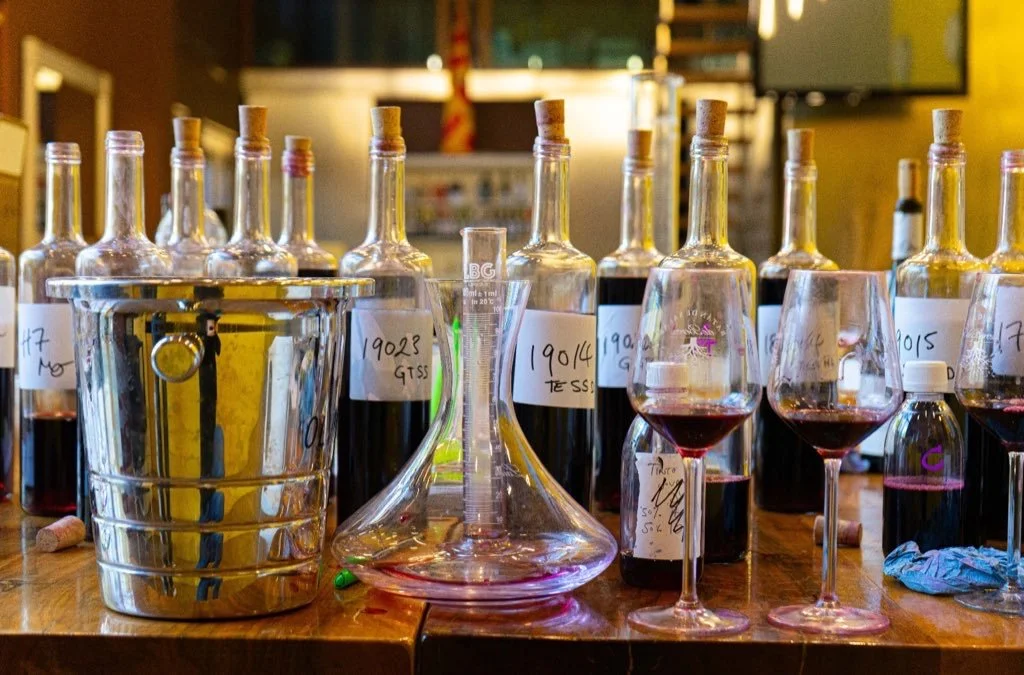
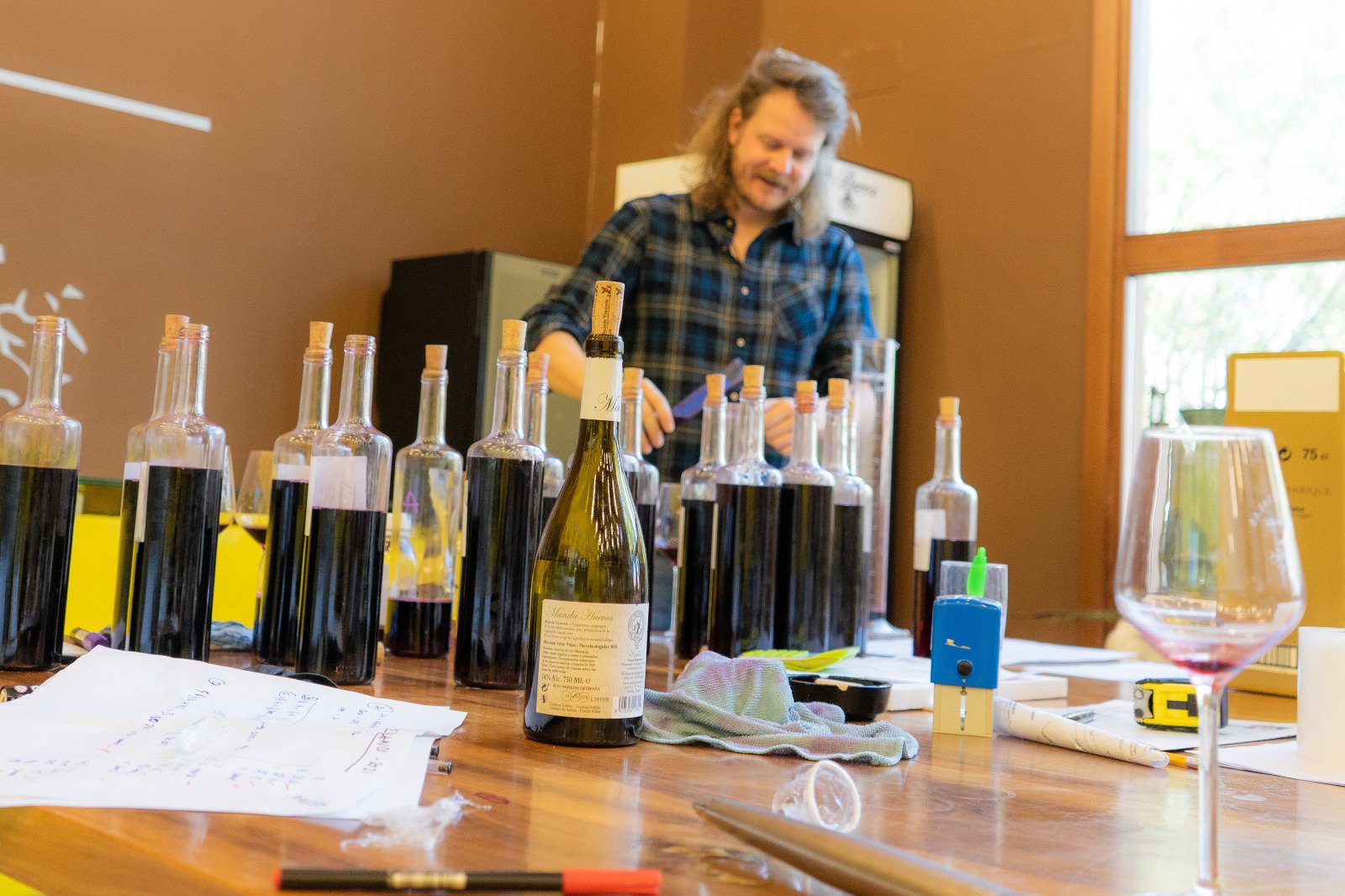
We usually blend in January when the wines have finished the first stages of maturation and we can start formulating a plan for them. And as always at Paso, this process begins by tasting. And tasting. And tasting. We try everything multiple times and then start the task of creating mini versions of our whole portfolio from the top wines through to the house wines and anything we want to hold for a year or longer. Some years this process is easy and we’re in the restaurant at lunch and other years we’re in the lab for hours on end with a bench groaning under the weight of measuring cylinders. I love it. If harvest is all about long hours, hard yards and quick thinking. Blending is all about quiet finesse, pontificating and trying to bottle lightning that will ignite when it’s poured in twelve months’ time. It’s technical and infuriating as you try to match palates with logistics. You’ve got to make sure tanks are full and wines are produced in sufficient numbers for the year ahead without compromising quality. At times is feels like a mathematical dance but when the wines start to reveal themselves it’s a joy to be part of. You’re peering into their future and trying to give them as much chance as possible of being the wine you want them to be. We haven’t always got it right but we’re getting better at it every year and I don’t think we’ll be stopping anytime soon.