
Buy wine, plant a tree.
It might not be revolutionary but I’m proud to say we are planting a tree for every order we receive on www.paso-primero.com. On the surface this is a pretty simple proposition so why am I reopening my blog after four years to write about it? Well, just like putting your head above the parapet to say you make vegan wines, the world of eco-balancing and carbon offsetting it fraught with a surprising amount of contention and the backlash to a company revealing their green agenda can be gobsmackingly vile. These types of projects are regularly seen as nothing more than a green washing exercise with no grounding in real science. It’s definitely true that some eco-businesses have a lack of traceability that a cold war spy would be envious of but hey, I’m not Shell trying to cover up oil spills with good PR. I Just want to do something nice and make Paso a more responsible business. We’re pushing towards a regenerative organic future in the vines so why not look at the end of the chain too and see what we can do to reduce the negative impact selling wine has on the environment?
Making Green Wine.
This wasn’t always my plan for Paso. The goal from the start was simply to make wines I want to drink and sell enough of them to have fun with my family when I’m not making them. Recently though, the goal has evolved. I still want to make wines I want to drink but I also want my wines to be more than just good drinkers. I want them to have an identity. I want them to represent the region in which they’re made and be an extension of our family’s values. I want them to have genuine credibility. I want them to be part of the new age of business responsibility where our vineyard isn’t just a pretty mono-crop but a viable and valuable addition to the environment. I also want our business to be clear and transparent about how it functions and show that we understand the scope of its impact. That’s why i’m not just running a blanket approach plant-a-tree-save-a-whale promo. I’m genuinely concerned about looking like this is a PR stunt and want people to realise that I’ve thought about what Paso can do.
Our vineyards are being farmed organically and we’re looking into regenerative viticulture because we believe this approach makes better wine. It also makes for a better environment through an increase in biodiversity and provides a more viable future for the vines. It’s exciting stuff and when I’m back in Spain for harvest I hope to write and film at length about the steps we’re taking but that’s all focused on the vineyard. The environmental impact of our business is actually felt more keenly further down the chain. That’s where I want to find areas we can improve, mitigate, and resolve the impact our wines have when they’ve left the winery.
The Footprint.
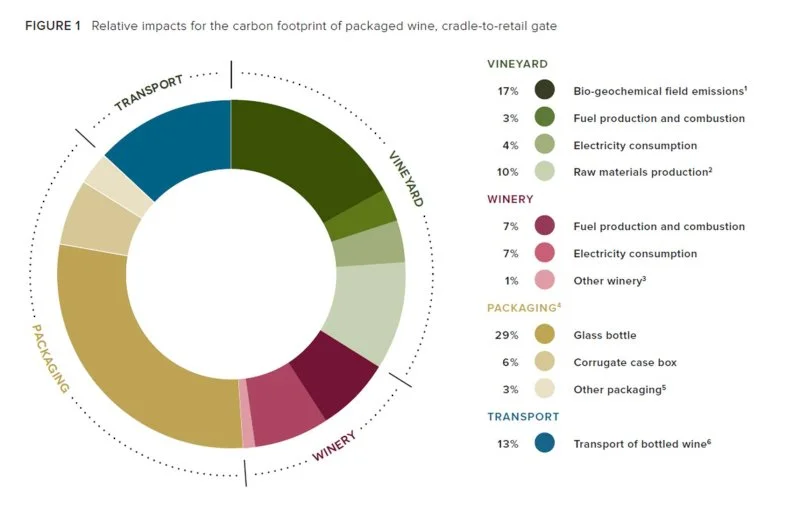
Taken from the California Sustainable Winegrowing Alliance's 2011 assessment of California Wine's Carbon Footprint.
Wine media is full of images depicting the various stages of production and their relative carbon or environmental footprints. They broadly show the same conclusion that packaging, and transport are the largest sink holes and the areas most in need of reflection. If I’m reinvigorating my approach to the vineyard and the winery, then it stands to reason that I should be looking at these areas too. My wines are already in the lightest glass possible (we can’t look at other formats due to D.O regulations) and everything is packed in recycled cardboard boxes. We’ve discussed removing the foil on our bottles under cork, but they help to keep corks clean so we can bottle when wines are ready and label later, which reduces costs and improves efficiencies in the winery. Maybe I should use a different material, maybe there are other solutions, it’s a work in progress and I’m reviewing it. That’s fairly minor though and the big problem for Paso’s green revolution is there just aren’t many areas I can directly influence. Paso is a tiny business that makes wine in Spain and sells it internationally. That process is fundamentally going to leave a footprint and I can’t afford to change the system. So, if I can’t avoid it, is there anything I can do to mitigate this footprint? Can I impose a ‘green-tax’ on the business to balance the books? Inevitably, the answer I came up with was carbon credits and planting trees.
This is where things get a bit murky.
The Solution.
The trendy thing to do is offset the carbon generated where I do some spurious calculations and try to gauge our impact to see if we can buy enough carbon credits to balance it all out. Which, to be honest, is exactly what I did.
From my rough maths, in a year, one mangrove tree will sequester the same amount of carbon it takes to produce and ship a case of wine and that mangrove tree should last for around 30 years which sounds great. We’re in business! We can skip out carbon neutrality and be carbon positive just like those upstanding dudes at BrewDog (ahem).
Oh, if it could be so easy. I know it’s not an easy like-for-like swap. I know that a tree I plant doesn’t suddenly soak up all the carbon I’ve generated. Life is always more complicated than that. There is no magic substitute that works as well as reducing carbon output in the first place. But surely doing something is better than doing nothing. At least that was what I thought. I mean, how could it possibly be a bad thing to plant a tree?
I do tend to drop on the side of optimism on most things and I wanted to believe that tree planting is as wholesome as it sounds but even a cursory google shows that the world of carbon offsetting isn’t all tha pure and true. People love to jump to the headline-grabbing worst-case scenarios, but it is difficult to see past the endless stories of dubious scientific studies, unprovable levels of efficacy, illegitimate planting practices, squandered and/or embezzled finances and god knows how many other reasons to not get involved. I mean, bloody hell, if Mr Environment George Monbiot is against carbon offsetting then who am I to disagree? This is where I became paralysed with discomfort and my idea of ‘buy a wine, plant a tree’ ran aground. I didn’t want to end up supporting a Wall Street Bro who’s created an eco-company to capitalise on the boom in business conscience clearing, whilst soaking up grants and enabling their clients to sanitise their google search results. Or worse, I didn’t want to end up supporting a project that did more harm than good by planting fast growing, non-native species that decimate a region in the hunt for the western dollar. It felt like planting schemes had no regulation, no responsibility and little to no impact on the here and now. I tried to find projects that were local so I could get directly involved but again fell short. Nothing felt right and the idea of using our growing business as a force for good floundered. We still do everything we can within our business parameters and are constantly improving the farming practices and packaging solutions. But I left it there.
Until I told this story to a friend who asked me why I stopped? And the main reason I could give was that I hadn’t found the perfect solution. Their response was – there is no perfect solution but there are good options which are better than no options. And that is how I found Ecologi. A social enterprise who, as far as I can tell, are better than deciding to do nothing. They are focused on projects of re-forestation rather than new plantings in areas that don’t offer long term solutions to environmental damage. They use local work forces and have long term goals for all the plantings which are monitored and maintained long after the trees have been planted. There are risks with backing projects. Let’s face it they are accredited by everyone, but I could set up an eco-accreditation firm tomorrow. It’s a case of putting faith where you see fit and I like them. I think about 77% to 85% of my payments will go direct to the schemes and that’s not bad for charitable projects who have salaries to pay too. They are definitely a company that wouldn’t exist without the internet and modern sensibilities and maybe there is a dose of liberal guilt in my desire to plant trees, but I want to do something, and I needed to start somewhere.
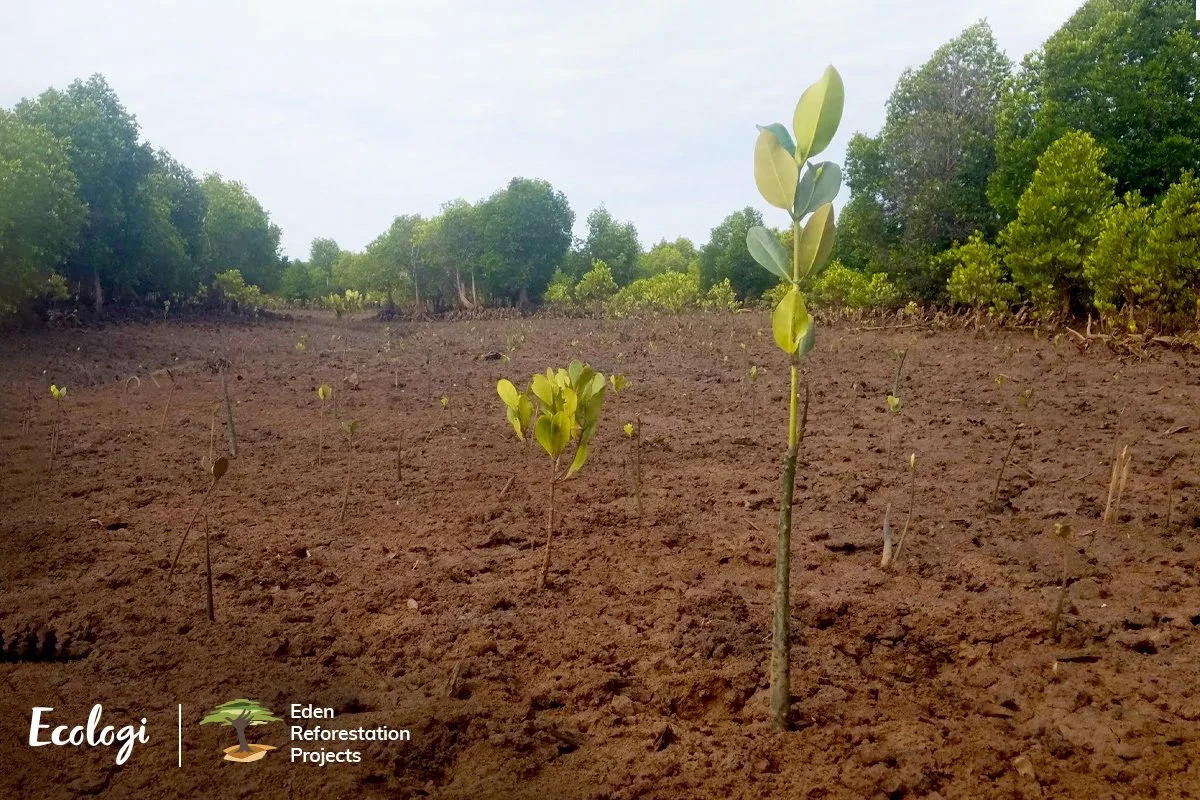
Reforestation project in Madagascar.
I’m hoping that this small gesture is part of the process of developing Paso into a company I can be proud of in its entirety. I also hope that by writing this blog and showing my working, this isn’t a static moment for Paso. This is a learning process and an evolving situation. I am not saying I’ve found a solution. I’m just saying I’ve found something that I’m prepared to get behind which I wanted to share with you. If you have better projects for me to back, more data for me to review or advice on what I should be doing please let me know. Until the next project comes along though, I’m going to pay for some trees to be planted and hopefully that makes Paso an even better choice when you’re buying your next bottle of wine.