
Introducing Pasotismo Blanco.
For a long time now, we’ve asked ourselves if we can make a white wine worthy of a permanent place in the Pasotismo range. We set a high bar for these wines so anything that gets a Pasotismo label has to be something that can sustain or surpass that standard for years to come. They’re wines that fully expose our winemaking ideals as we look for the things that make our region, our vineyards and our winery stand out from the rest. Winemakers always talk about ‘wines with character’ and it’s become a bit of a cliché but like all good clichés, there’s a lot of truth in there. We really are looking for little nuances or variations that are unique to us and will enable further exploration of the Pasotismo range.
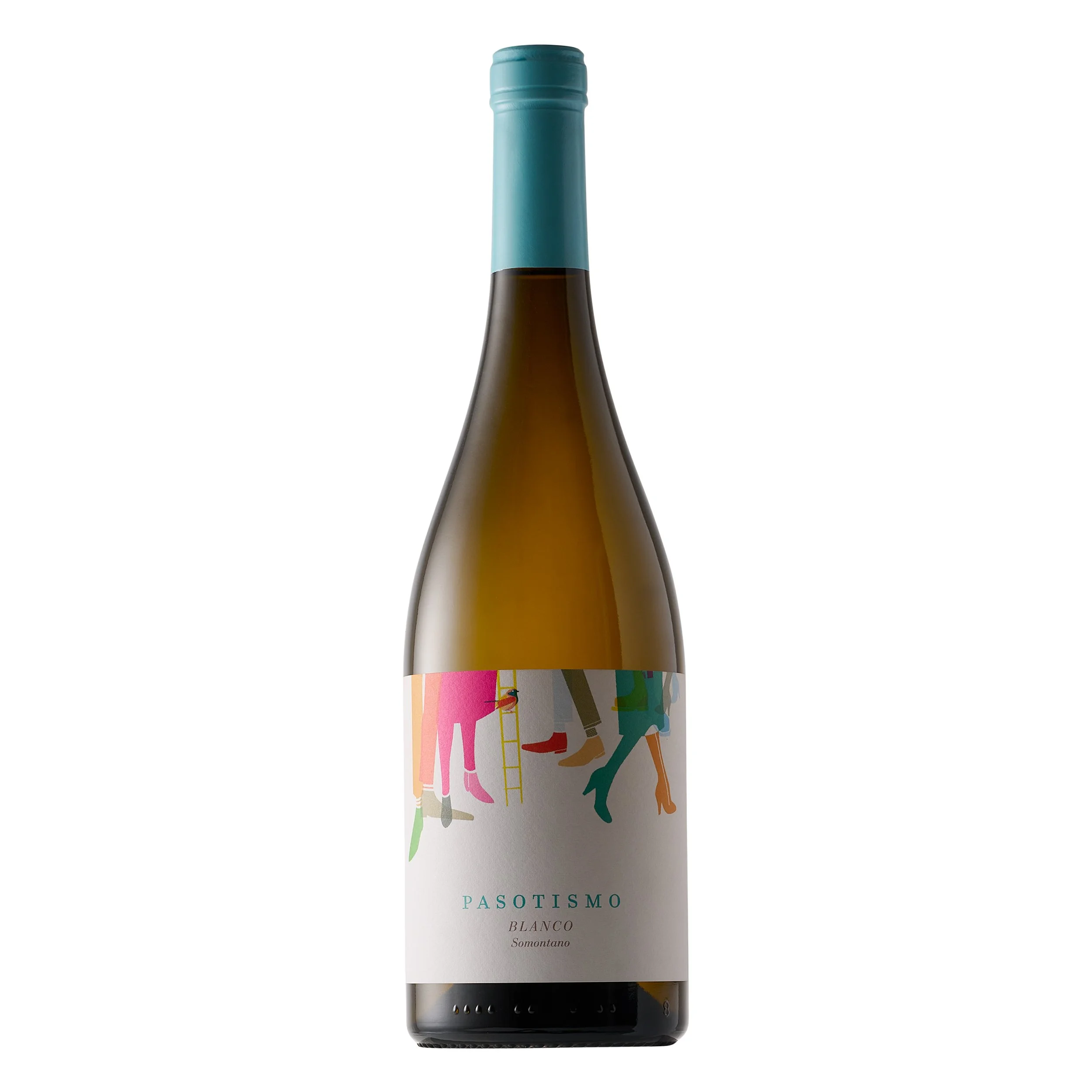
For our Paso-Primero we have the simple mantra of making the best table wines available. Organic, sustainable, fun, approachable, all the best superlatives for a wine you can come back to time and time again. With the Paostismo range we’re trying to create wines that offer all of that and more. We want them to be wines you have to come to us for. Wines that express themselves in ways that other wines don’t. Obviously using local varieties is our easiest route to do this but we’re also reimaging how grapes are farmed in Somontano, constantly evaluating the best practices in the vineyard and the winery to make sure that the Pasotismo wines are always evolving into the best version of themselves.
So, what can I tell you about Pasotismo Blanco that sets it apart from Paso-Primero Blanco and the world of white wines available to you? What makes it a wine worthy of our Pasotismo range? Well, I’m in danger of dragging yet another blog out for too long (I clearly need a better writing trope to get out of these lengthy essays) so I’m going to unleash some bullet point paragraphs. If you want to skim the headlines you can, if you want to read some detail you can. I am trying to get these to a point where you don’t have to refill your glass before the end, but I get a bit carried away. Maybe launching a new wine is passé for some folks but I don’t think I’ll ever get over the excitement of releasing a wine in to the wild, so I usually have a lot to say about it!
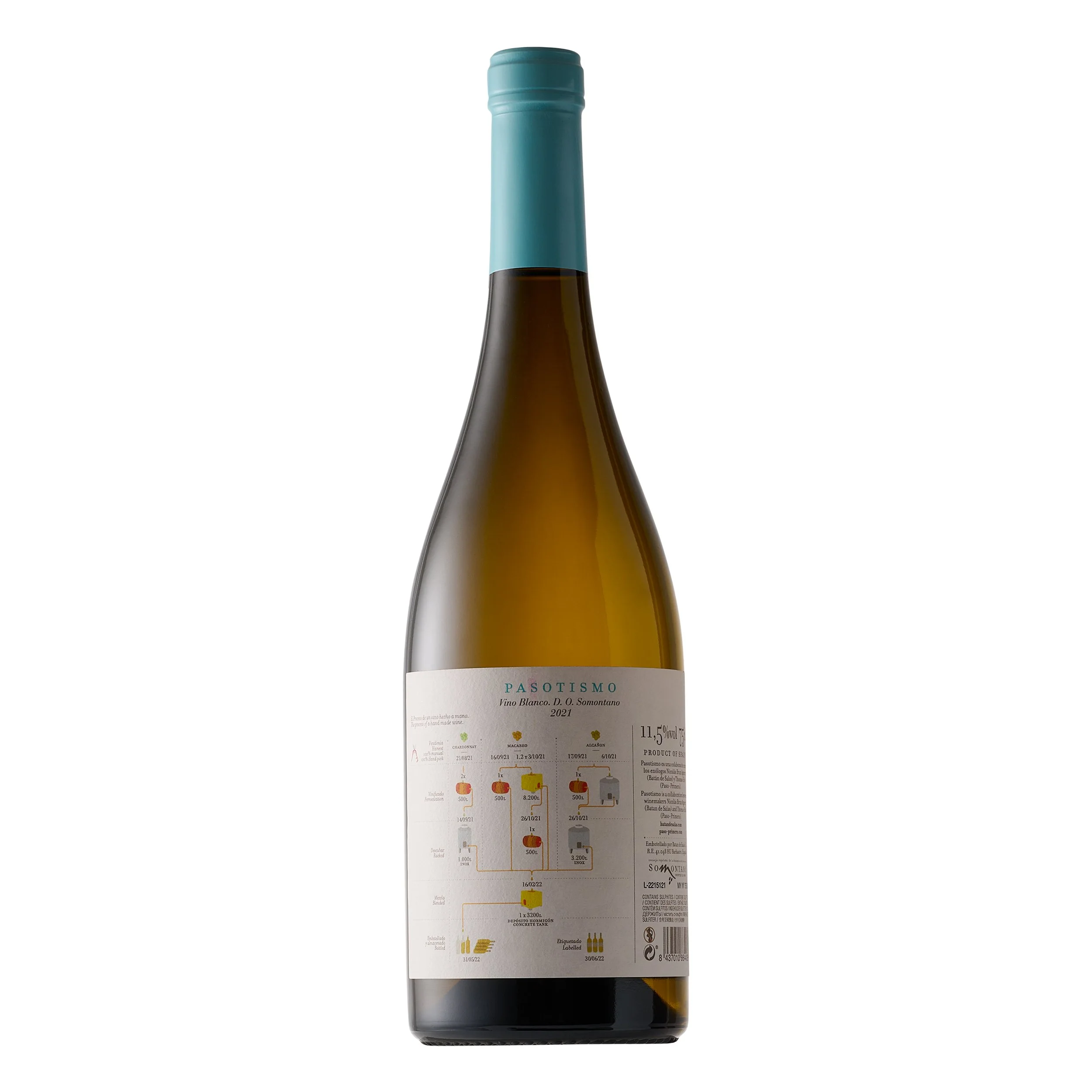
N.B. As with all our Pasotismo range, the Blanco has a pictogram on the back explaining exactly how we made the wine even down to the days we picked the grapes. This is definitely a more succinct option than letting me talk endlessly about the wine!
1. Introducing Alcañon and Macabeo.
We’re making great strides in our vineyards as we complete our journey into organics and one of our biggest successes has been working with varieties that have dropped off the radar. In 2021 that meant working with two new whites; Macabeo* and Alcañon**. I say new. It’s like buying clothes from a charity shop. They’re new to us but have been kicking around the region for many years and became unfashionable. I’ve never shied away from an opportunity to embrace old styles, it’s worked really well with the Moristel ’76, but whites have less room to hide than reds so working with ‘traditional’ (or to use a less favourable term, ‘non-commercial’) white varieties was a much bigger risk. In what has become our signature approach to new varieties we went big on the number of styles and trials to give ourselves as much room to manoeuvre as possible. This meant we had skin contact, cold soak, wild ferments next to inoculated, lean, stainless steel ferments next to lees stirred barrel ferments. Through this process we were able to see a style emerge that we were excited about with the chardonnay and alcañon providing a soft, fruity framework in which the macabeo can develop and add its unique depth of flavours. We nearly rushed this wine to market to make the most of the summer sunshine but I’m so glad we didn’t. Six months in bottle have taken this wine to a place I wasn’t sure it would reach, and I think it will continue to improve. As we approach a season where whites need to be bigger and bolder, I think Pasotimo Blanco is ready to hold its own.
*Macabeo (or Viura) is pretty well known and a mainstay of our not-too-distant neighbours in Cava and Rioja. It’s not overly prevalent in Somontano though and a bit of an unknown to me and the team in Spain. It’s fairly simple in young wines with lemon grass, lime peel and faintly herbaceous characters but it ages incredibly well and develops honey and nutty characteristics over time.
**Alcañon was nearly extinct a few years ago but this indigenous variety is a true Somontano classic. Not farmed anywhere else, it offers light, fresh, aromatic wines even in the heat of the last few years. I’m amazed at how late we can pick and everything I’ve seen from this variety proves that our future lies away from international varieties.
2. Elegance, finesse and a wine for taking your time.
If our wines are known for anything it’s their abundance of bright, ripe fruit. It sounds daft to say this about something made from fruit but it’s amazing how many wines are clouded by the winemaking process and while this adds so much to so many, it doesn’t fit for us. We like clean lines and to taste joyful expressions of the fruit we started with. With Pasotismo Blanco this approach has taken us to new heights of elegance where we have produced a wine of clarity and restraint. The subtle stone fruit character is lifted by soft citrus tones with a touch of the elusive, metaphorical, minerality that gets so many sommelier’s hot under the collar. For me, the real hook that sets Pasotismo Blanco apart from the rest of our wines is the abundance of length. It’s a wine which opens up beautifully as you work through the bottle but the weight, texture and the delicate flavours left on the palate takes it to that Pasotismo level.
3. A lightness of touch at only 11.5%.
We’re constantly reviewing how we approach our winemaking and constantly look at what we’re trying to achieve with our wines. One of the big issues with modern winemaking is the rate at which alcohol levels have risen. We always pick on taste but with commercial vineyards and changeable seasons this means we have been producing wines above our preferred alcohol levels. One of the reasons for working with unheralded local varieties is their natural ability to produce flavour faster, and at lower sugar concentrations. This combined with a more focused approach to farming has yielded crops with a substantially lower alcohol potential. Pasotismo Blanco is a frankly unheard of 11.5% and it’s certainly not a lesser wine for it.